Why Your Shopify Products Are Invisible to ChatGPT Shopping (And How to Fix It in 2026)
Why Your Shopify Products Are Invisible to ChatGPT Shopping (And How to Fix It in 2026) In April 2026, Shopify auto-enrolled 5.6 million stores into ChatGPT Shopping through Agentic Storefronts. Overnight, every merchant on the platform got a seat at the AI commerce table. The problem? Most of them are still invisible. Being enrolled is not the same as being recommended. AI shopping agents like ChatGPT, Perplexity, Microsoft Copilot, and Google's Gemini do not browse your storefront the way humans do. They parse structured product data — and if your feed is incomplete, vague, or written for humans alone, the agent silently skips you. This is the single biggest gap in agentic commerce right now. Here is what is actually breaking, and what to do about it. How AI Shopping Agents Actually Read Your Store AI agents do not see your theme, your hero banner, or your carefully crafted brand copy. They ingest the underlying data structure — titles, descriptions, attributes, GTINs, pricing, availability, and structured metadata. When a shopper asks ChatGPT for "a white linen midi dress under $120 with sleeves," the agent does not read marketing language. It filters structured fields. If your product title is "Effortless Summer Statement" instead of "White Linen Midi Dress with Short Sleeves," you lose the match before the conversation even starts. This is the new SEO. It is called Generative Engine Optimization (GEO), and it runs on feed quality. The Four Reasons Products Disappear from ChatGPT Shopping Based on what is publicly documented about ChatGPT Shopping's enrollment data, the failure modes are consistent: Incomplete attribute coverage. Missing size, color, material, fit, or category fields drop products out of structured queries entirely. Rich descriptions do not compensate. Marketing-rewritten titles. Pretty titles are useless for matching. Keep titles structured and product-accurate; move brand voice into the description. Stale inventory and pricing. Google's Shopping Graph refreshes two billion listings per hour, and ChatGPT prefers live data. Nightly feed updates lose you intra-day stock and price changes. Missing GTINs and structured specs. NRF 2026 guidance recommends titles of 30+ characters, descriptions of 500+ characters, GTIN always populated, and a minimum of 3 additional product images. Most stores hit none of these consistently. What "AI-Ready" Actually Means The Agentic Commerce Protocol (ACP) from OpenAI and Stripe, and Google's Unified Commerce Protocol (UCP), are converging on the same requirement: clean, complete, real-time structured product data. The required fields are deceptively simple — product ID, title, description, price, availability, image URL, category. The leverage is in the optional ones: structured attributes, variants, ratings, GTIN, brand, condition. These are what AI agents use to rank one merchant over another in a side-by-side comparison. If your team is still pushing feeds nightly through a manual export, you are competing with merchants whose feeds update on inventory change. That gap will only widen. The Practical Fix You do not need a headless rebuild to win in agentic commerce. You need a feed that is structured, complete, and live. Specifically: Audit every product for required and high-leverage optional fields Rewrite titles as structured product descriptors, not marketing lines Push attributes into Shopify metafields, not buried in HTML descriptions Move your feed cadence from nightly to near-real-time Validate against ChatGPT's JSONL spec and Google's Shopping Graph requirements This is exactly what VirtueNest was built for — keeping Shopify product feeds AI-ready across ChatGPT, Google, Copilot, and Perplexity from a single pipeline, without rebuilding your stack. AI is the new front door. The merchants who treat their product feed as infrastructure, not an afterthought, are the ones being recommended in 2026. Ready to make your store AI-ready? Install VirtueNest on Shopify →
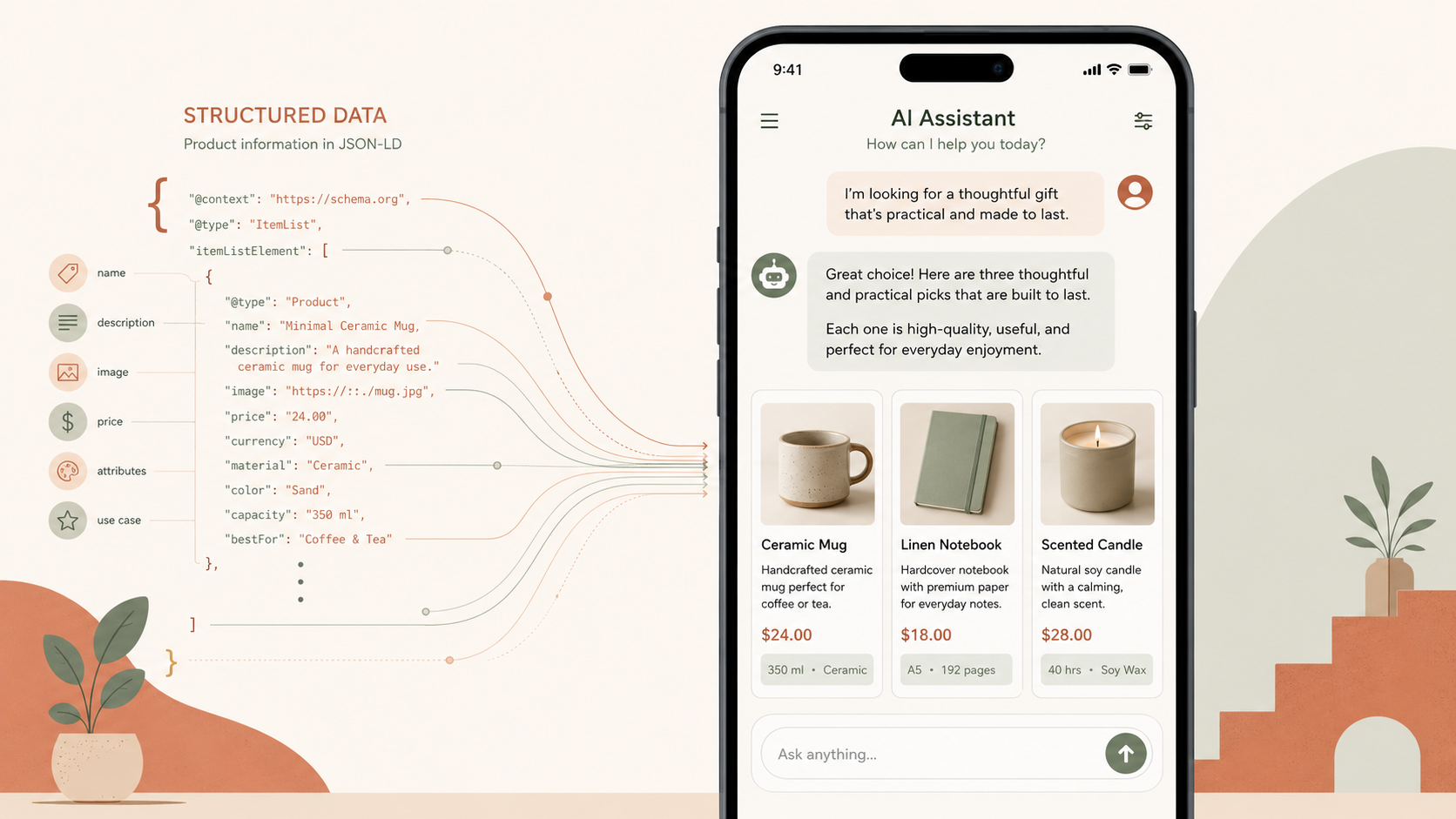
In April 2026, Shopify auto-enrolled 5.6 million stores into ChatGPT Shopping through Agentic Storefronts. Overnight, every merchant on the platform got a seat at the AI commerce table.
The problem? Most of them are still invisible.
Being enrolled is not the same as being recommended. AI shopping agents like ChatGPT, Perplexity, Microsoft Copilot, and Google's Gemini do not browse your storefront the way humans do. They parse structured product data — and if your feed is incomplete, vague, or written for humans alone, the agent silently skips you.
This is the single biggest gap in agentic commerce right now. Here is what is actually breaking, and what to do about it.
How AI Shopping Agents Actually Read Your Store
AI agents do not see your theme, your hero banner, or your carefully crafted brand copy. They ingest the underlying data structure — titles, descriptions, attributes, GTINs, pricing, availability, and structured metadata.
When a shopper asks ChatGPT for "a white linen midi dress under $120 with sleeves," the agent does not read marketing language. It filters structured fields. If your product title is "Effortless Summer Statement" instead of "White Linen Midi Dress with Short Sleeves," you lose the match before the conversation even starts.
This is the new SEO. It is called Generative Engine Optimization (GEO), and it runs on feed quality.
The Four Reasons Products Disappear from ChatGPT Shopping
Based on what is publicly documented about ChatGPT Shopping's enrollment data, the failure modes are consistent:
- Incomplete attribute coverage. Missing size, color, material, fit, or category fields drop products out of structured queries entirely. Rich descriptions do not compensate.
- Marketing-rewritten titles. Pretty titles are useless for matching. Keep titles structured and product-accurate; move brand voice into the description.
- Stale inventory and pricing. Google's Shopping Graph refreshes two billion listings per hour, and ChatGPT prefers live data. Nightly feed updates lose you intra-day stock and price changes.
- Missing GTINs and structured specs. NRF 2026 guidance recommends titles of 30+ characters, descriptions of 500+ characters, GTIN always populated, and a minimum of 3 additional product images. Most stores hit none of these consistently.
What "AI-Ready" Actually Means
The Agentic Commerce Protocol (ACP) from OpenAI and Stripe, and Google's Unified Commerce Protocol (UCP), are converging on the same requirement: clean, complete, real-time structured product data.
The required fields are deceptively simple — product ID, title, description, price, availability, image URL, category. The leverage is in the optional ones: structured attributes, variants, ratings, GTIN, brand, condition. These are what AI agents use to rank one merchant over another in a side-by-side comparison.
If your team is still pushing feeds nightly through a manual export, you are competing with merchants whose feeds update on inventory change. That gap will only widen.
The Practical Fix
You do not need a headless rebuild to win in agentic commerce. You need a feed that is structured, complete, and live. Specifically:
- Audit every product for required and high-leverage optional fields
- Rewrite titles as structured product descriptors, not marketing lines
- Push attributes into Shopify metafields, not buried in HTML descriptions
- Move your feed cadence from nightly to near-real-time
- Validate against ChatGPT's JSONL spec and Google's Shopping Graph requirements
This is exactly what VirtueNest was built for — keeping Shopify product feeds AI-ready across ChatGPT, Google, Copilot, and Perplexity from a single pipeline, without rebuilding your stack.
AI is the new front door. The merchants who treat their product feed as infrastructure, not an afterthought, are the ones being recommended in 2026.